
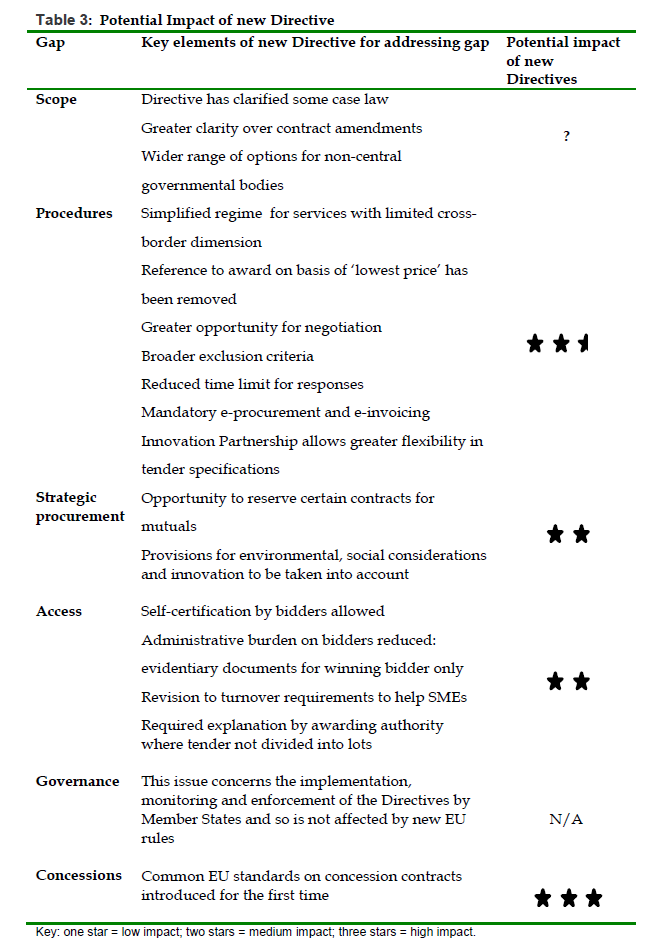
The strongest impact is likely to arise in
the field of concessions because of the fact that there was previously no common
European legislation in this area. The Directive contains a number of measures that will
help SMEs to access the public procurement market but we consider that language issues
and the lack of an EU procurement passport will continue to exert some constraint on
access. The fact that strategic procurement is specifically permitted under the Directive is
likely to lead to an increase in its usage but it is not yet clear how significant this uptake
will be, or whether there may be unintended consequences (e.g. if it creates an additional
administrative burden). The greater flexibility in procedures should help to reduce the
over-use of the full procedure and thereby reduce administrative costs for awarding
authorities and bidders, while ensuring a more efficient and effective procurement
process. However, much depends on the extent to which awarding authorities are
confident that they will not face legal challenges as a result of using these procedures and
are therefore willing to change their current procurement practices. Finally, the impact of
the Directive on the ‘scope’ gap is unclear because it depends significantly on the extent
to which awarding authorities and bidders understand the new rules. As such, the
impact will only become clear once stakeholders have had time to digest and reflect on
the new rules.



Be the first to write a comment.