Recovery and Resilience Facility [EU Legislation in Progress]
Work in the era of AI: Time for a Digital Social Contract
2020 ESPAS Conference – Thinking about the Future: Europe’s Road to 2030
Comments
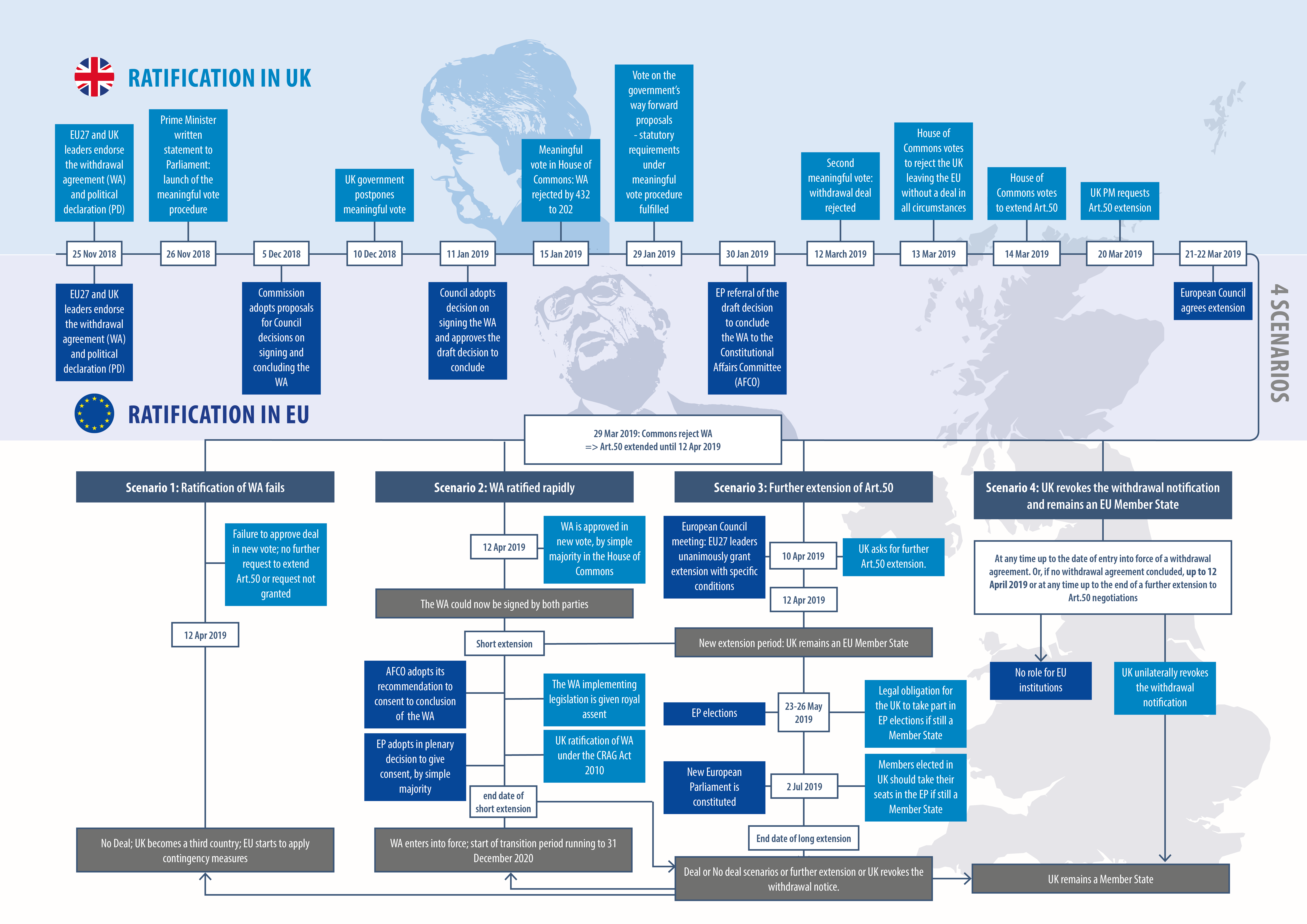
Ratification in the UK is by a Minister of the Crown, the PM or occasionally the Monarch. It is not done by Parliament. CRAG is an obligation to lay the agreement before parliament so any concerns can be raised before ratifucation.
Dear Lee,
You are absolutely correct! And indeed inside the briefing, we do not say that it is the Parliament that ratifies an international treaty under CRAG.
Just a few relevant parts from the briefing:
Page 4: “Under Part 2 of the CRAG Act 2010, government may ratify a treaty if the House of Commons does not object, although both Houses must consider the treaty.”
Page 3: “The UK Parliament must complete three steps before the UK can ratify the withdrawal agreement (…)”.
Page 5: “The UK Prime Minister stated that ‘where there is insufficient time remaining following a successful meaningful vote, we will make provision in the withdrawal agreement bill, with Parliament’s consent, to ensure that we are able to ratify on time'”.
In the latter cases,” UK” and “we” mean the government/the executive.
 / April 9, 2019







Ratification in the UK is by a Minister of the Crown, the PM or occasionally the Monarch. It is not done by Parliament. CRAG is an obligation to lay the agreement before parliament so any concerns can be raised before ratifucation.
Dear Lee,
You are absolutely correct! And indeed inside the briefing, we do not say that it is the Parliament that ratifies an international treaty under CRAG.
Just a few relevant parts from the briefing:
Page 4: “Under Part 2 of the CRAG Act 2010, government may ratify a treaty if the House of Commons does not object, although both Houses must consider the treaty.”
Page 3: “The UK Parliament must complete three steps before the UK can ratify the withdrawal agreement (…)”.
Page 5: “The UK Prime Minister stated that ‘where there is insufficient time remaining following a successful meaningful vote, we will make provision in the withdrawal agreement bill, with Parliament’s consent, to ensure that we are able to ratify on time'”.
In the latter cases,” UK” and “we” mean the government/the executive.