Cost of Non-Europe Reports identify the possibilities for economic or other gains and/or the realisation of a ‘public good’ through common action at EU level in specific policy areas and sectors. This Cost of Non-Europe Report seeks to analyse the costs for citizens, businesses and relevant stake-holders of remaining gaps and barriers in the European Single Market, building on and updating the 1988 Cecchini Report, which quantified its potential benefits.
Part II – Single Market for Services
This particular study – the second in a series – attempts to take stock of the remaining gaps or deficits in intra-EU market access obligations in services, and the related deficits in the proper functioning of the internal market for services. It also tries to identify the quantitative and qualitative economic gains of overcoming the costs of non-Europe of the remaining fragmentation, insofar as the EU can address such deficits.
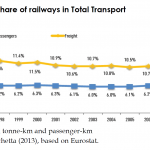
Source: Pelkmans and Luchetta (2013), based on Eurostat.
Source: Eurostat
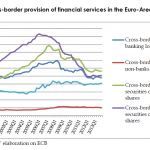
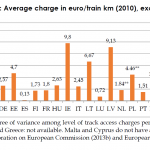
Source: Authors’ elaboration on European Commission (2013b) and European Commission (2012).
Source: Authors’ elaboration on BEREC (2013a), BEREC (2013b), and Digital Agenda Scoreboard
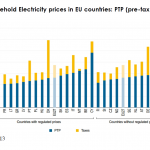
Source: ACER, 2013
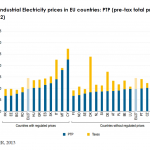
Source: ACER, 2013
Source: ACER, 2013
Source: ACER, 2013
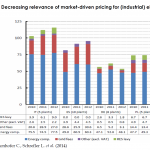
Source : Egenhofer C., Schrefler L. et al. (2014)
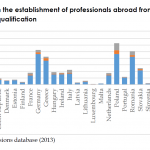
Source: Regulated professions database (2013)
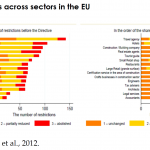
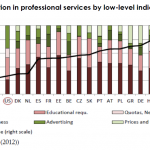
Source: Paterson et al. (2012))
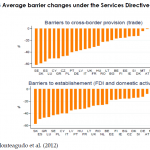
Source: Monteagudo et al. (2012)
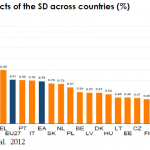
Source: Monteagudo et al. 2012
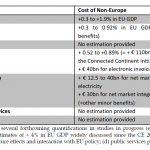
Note: without (a) several forthcoming quantifications in studies in progress (e.g. in rail); (b)
Digital market (estimates of + 4% in EU GDP widely discussed since the CE 2010 report); (c)
without infrastructure effects and interaction with EU policy; (d) public services procurement
Source: Authors’ elaboration on London Economics and PwC (2013).















[…] Part II – Single Market for Services […]